

Concept-First Authors
Turn a technology, discovery, future scenario or scientific question into a story architecture with characters and consequences.
Strong science fiction connects ambitious ideas to believable systems, meaningful consequences and characters readers care about. The concept can be huge, but the experience still has to feel clear, grounded and emotionally alive.


Science fiction can begin with a technology, discovery, future society, alternate history, cosmic question or scientific possibility. The challenge is turning that speculation into a narrative readers can understand without flattening the wonder.
We help connect the idea to character goals, social consequences, world rules and escalating conflict so the reader is not only impressed by the concept—they are invested in what it does to people.
The starting material can be a concept, research notes, a partial draft or a complete manuscript. The workflow changes, but clarity and narrative discipline remain the standard.
Turn a technology, discovery, future scenario or scientific question into a story architecture with characters and consequences.
Organize societies, systems, terminology, timelines and rules so the reader can enter the world without being buried in explanation.
Strengthen pacing, continuity, exposition, character motivation and the relationship between the speculative idea and the plot.
Track recurring rules, technology, factions, locations and long-range arcs while keeping the current book satisfying on its own.
Science fiction earns emotional weight when the speculative element affects relationships, identity, survival, power, ethics or belonging. We keep the human experience visible even when the scale of the idea is enormous.
Define the central speculative change clearly enough that its effects can be traced through the world and plot.
Readers will accept extraordinary possibilities when the rules remain understandable, consistent and consequential.
Technology and science should create choices, pressure and tradeoffs rather than existing only as explanation.
Give readers a character-level reason to care about the larger future, system or discovery being explored.
The workflow moves from the central speculative premise into world rules, story architecture, drafting, revision and production without letting complexity overwhelm readability.
Clarify the “what if,” genre lane, central character, future or scientific premise and intended reader experience.
Establish the rules, limits, timeline, terminology, social effects and consequences that make the world coherent.
Map major turning points, discoveries, reversals, character arcs and the order in which information should be revealed.
Build scenes where the speculative elements affect decisions, conflict and relationships rather than stopping the story.
Check logic, continuity, exposition, pacing, terminology and whether the story remains understandable without overexplaining.
Move the refined manuscript into editing, cover design, publishing, marketing and reader discovery.
Science fiction asks the reader to learn unfamiliar information while continuing to care about story. The craft is in controlling when, why and how that information arrives.
Track the rules, limitations and consequences of technology, science, politics, travel, time or other speculative systems.
Deliver unfamiliar information in context so the reader learns what matters without repeated information dumps.
Show how the speculative change affects institutions, relationships, choices and conflict instead of keeping it isolated from daily life.
Use invented or technical language consistently while giving the reader enough context to remain oriented.
Match the level of scientific explanation to the kind of story being told and avoid unnecessary detail that slows momentum.
Connect large-scale ideas to specific risks, desires and relationships so the ending matters emotionally as well as intellectually.
Editing, cover design, publishing, marketing, author presence and audio should all reinforce the same speculative promise, tone and audience expectation.
Refine structure, continuity, clarity, consistency and line-level prose before production.
Explore → 02Develop a visual direction that signals genre, tone and reader expectation before the first page is opened.
Explore → 03Plan formats, ISBN guidance, production and distribution around the selected publishing route.
Explore → 04Position the story around its audience, emotional promise, themes and strongest reasons to discover it.
Explore → 05Create an online home for the book, author story, media, events and future reader connection.
Explore → 06Extend the finished story into audio with narration and production choices suited to the reading experience.
Explore →Our current portfolio proof below comes from published fiction rather than a dedicated science-fiction case study. It demonstrates long-form development and production quality without misrepresenting those titles.
A published story brought to market as part of an ongoing author relationship. It is shown here as broader proof of fiction development and professional book presentation, not as a science-fiction-specific case study.
Explore Published Work →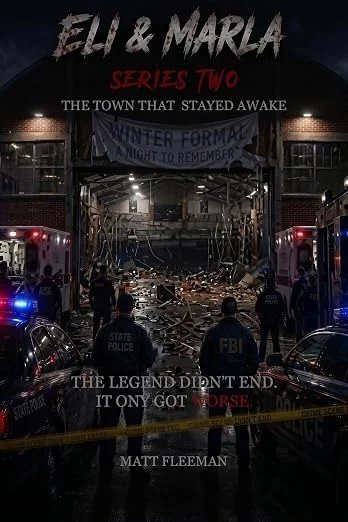
Another title in the Eli & Marla series, showing continuity across an author’s publishing journey. This second fiction title demonstrates the same continuity, editorial control and production discipline relevant to long-form speculative work.
Hard science fiction, space opera, dystopian, cyberpunk, military science fiction, climate fiction and other lanes carry different expectations. Positioning should guide cover, metadata and marketing without forcing the manuscript into the wrong category.
Discovery, technology, survival, social change, cosmic scale or another dominant idea should be clear enough to guide presentation.
Scientific density, pacing, age range, comparable authors and emotional tone help identify the audience most likely to connect first.
A specific system, dilemma, setting or human consequence gives the book a stronger point of difference than generic futuristic imagery.
A clear development workflow helps separate discovery, research, world logic and drafting so complexity becomes a strength instead of a barrier.
“As a first-time author, having people willing to guide me made a big difference.”
“The team has been very professional throughout the process.”
“They listened patiently and guided me step by step through every stage of publishing my book.”
You can begin with a scientific idea, future setting, characters, scenes, research or a draft. The world does not need to be completely documented before story development begins.
No. The amount of technical detail should match the story. Research and subject-matter review can support plausibility while the manuscript stays focused on reader experience.
Yes. We can help track systems, timelines, terminology, rules, institutions, technology and what each character knows at different points in the story.
Information is strongest when it arrives because a character needs it, encounters it or suffers the consequences of it. We look for ways to move explanation into action, dialogue and cause-and-effect.
Yes. Series work can include continuity, recurring systems, character arcs, unresolved questions and future-book planning while protecting the current book’s payoff.
Yes. Editing, cover design, publishing, author website design, marketing and audiobook production can be coordinated once the manuscript is ready.
Share the concept, future setting, notes, sample chapters or manuscript you already have. Name, Phone Number and Email are the only required fields. Everything else is optional.
Prefer to talk? 332-264-9264Start with a private conversation about the central idea, characters and material you already have. We’ll help define the next practical step.
Your final live-chat provider will appear here. Until then, this fallback captures a normal website inquiry.